Introduction Rising in the highlands of Angola and flowing more than 3,400 kilometres to the Indian…
Raphia Palms and Raphia Palm Botanical Reserves

Raphia (or Raffia) palm (Raphia farinifera)
Raphia palms belong to a genus of about twenty species of palms native to tropical regions of Africa, and especially Madagascar. “Raffia” as a word comes from the Malagasy language, derived from fia “to squeeze juice”
On the Red Data List raffia palm’s status is ‘Vulnerable’.
Appearance

- A raphia palm is a large, evergreen stemless or short-stemmed palm tree.
- The palm appears to be very tall because of its huge leaves, up to 18 m in length. They are the longest leaves found on any plant. The leaves are pinnate (arranged along a central stalk like the veins of a feather) and grow out of the top of the stem giving the crown a shuttle-cock appearance.
- Flowers are unisexual, in huge, branched inflorescences. Individual stems only flower once, usually when the plant is around 20 to 30 years old and then die after the seeds are mature (which takes five or six years), though the plant has a root system which remains alive and sends up new stems which fruit in their turn.

- The fruit is ovoid and contains a seed with overlapping “polished’, golden-brown scales.

Distribution
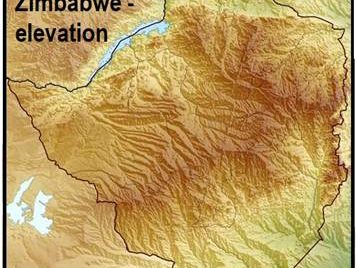
The raphia palm is a tropical tree, which requires for adequate growth, high rainfall (1,500 mm or more), high temperature (temperatures never fall below 10°c), high relative humidity and prolonged sunshine hours. Scientific reports and investigations on raffia palms have shown that its origin is traceable to West Africa, particularly along the swampy area of the tropical forest but now grows in West Africa in countries such as Burkina Faso, Cameroon, Gambia, Ghana, Guinea, Ivory Coast, Nigeria, Senegal, Sierra Leone (where it is often a cultivated cash crop) and in Central and Southern tropical Africa – Angola, D.R. Congo, Kenya, Tanzania, Uganda, Malawi, Mozambique, Zimbabwe – and the islands of Madagascar, Reunion, Seychelles and Mauritius. In Zimbabwe, Raphia farinifera is known from a few isolated populations only, the largest stand, called the Palm Block, at the northern end of the Great Dyke.
Uses (in general – not in Zimbabwe)
Raphia material is mainly gathered from the wild. The plant has a wide range of uses and is very important to the local people where it grows in Africa.
- Edible – Leaves can be eaten once boiled. The fruit is a source of edible oil and edible seeds. The stem, on the other hand, yield an edible starch. The products could also act as sweeteners in food preparations.
- Raphia wine – The sap of the palm can be fermented into raffia wine which is drunk by millions of people in Africa. It is traditionally collected by cutting a box in the top of the palm and suspending a large gourd below to collect the milky white liquid. Unlike with oil palms, this process kills the tree. When first collected from the tree, the sap is sweet and appears slightly carbonated. As it ages more sugar is converted. Raffia wine tends to be sweeter at any age when compared to oil palm wine. Both kinds of palm wine can also be distilled into strong liquors. Traditionally in some cultures where raffia or oil palm are locally available, guests and spirits are offered these drinks from the palm trees.
- Medicinal uses
- Fibre – A commercially important and strong fibre known as raffia is obtained from the leaves of this tree. Fibres can be rolled together for added strength before they are finally dried. The fibers can be dyed and woven into products such as decorative mats, baskets, placemats, hats, and shoes. Raffia has a natural resin in its leaves which increases its longevity; it also makes each strand flexible and pliant and also slightly waterproof, preventing it from cracking and becoming brittle over time. It is a strong, durable, pliable, yet soft binding material which is easy to dye.

- The lower surface of the leaves yield wax which can be used as a polish for boats and floors, and in candle production.
- Oil extract from fruit pulp and kernels is used in soap making.
- The wood is used for construction of furniture and houses as well as musical instruments. In local construction, raffia fibres are used for ropes, with branches and leaves providing sticks and supporting beams, and various roof coverings.
Tingwa Raphia Palm Botanical Reserve
Tingwa Raphia Palm Botanical Reserve (Latitude -16.7721° or 16° 46′ 20″ south Longitude 30.9031° or 30° 54′ 11″ east) is on the slopes of the Great Dyke of Zimbabwe, about 17 kms further along the road after Nyamaneche Sanctuary, at an altitude of about 1280 m above sea level. It is a protected area where permanent water creates a “soak” or “sponge” which supports this relict population. (The area is also an important cultural site.)

The photos below have been downloaded from a Tree Society expedition to this Botanical Reserve in January 2012 (https://www.zimbabweflora.co.zw/speciesdata/location-image.php?location_id=79&image_id=2, retrieved 3 August 2025). The photographers were P. Ballings, M.A. Hyde, B.T. Wurston and the late and illustrious tree expert Meg Coates-Palgrave was part of the expedition.

…………………………………………………………………………
Miware Raphia Palm Botanical Reserve
About 11 km down Horseshoe Road, on the way to Nyamaneche, is a turnoff to the right, in a slightly built up area, which is the route to the Miware Raphia Palm Botanical Reserve, along this road on the left. Miware (variously known as Mware, Maware or Mwari) was established in 1961 and is 34 hectares in extent. The estimate terrain elevation above sea level is 1303 metres.

(See below for satellite map).
Latitude: -16°41’59.57″
Longitude: 30°59’17.77″

………………………………………………………………………………………………………………………………………………..
In conclusion, the Raphia palm (Raphia farinifera) stands out as a remarkable and ecologically significant species native to tropical Africa and Madagascar, valued for its unique appearance, diverse uses, and cultural importance. Despite its wide range of benefits—from food and fiber to construction and traditional beverages—the species faces vulnerability and requires ongoing conservation efforts, especially in isolated populations such as those found in Zimbabwe’s Tingwa and Miware Botanical Reserves.
SOURCES
- Plantin – Raffia Palm, (Raphia farinifera) https://myplantin.com/plant/5467
- Raffia palm, https://en.wikipedia.org/wiki/Raffia_palm
- Raffia palm, https://www.britannica.com/plant/Arecales, written by W. John Kress
- Raffia Palm, Instituto Inhotim, https://www.inhotim.org.br/en/item-do-acervo/raffia-palm/
- “The Raffia Palm: A Neglected Economic Tree Crop of the North-West Region of Cameroon”. Emmanuel Etamo Kengo, PhD Department of History and African Civilizations, University of Buea, Cameroon, Asian Journal of Social Sciences & Humanities,Vol. 10(2) Aug-Nov 2021
- Flora of Zimbabwe, https://www.zimbabweflora.co.zw/speciesdata/location-display.php?location_id=79
- “Use and Cultural Significance of Raphia Palms”, Kamga, Suzanne Mogue et al, Economic Botany, 16th March, 2020,
- Raphia farinifera, Fachbereich Biologie : Universität Hamburg https://www1.biologie.uni-hamburg.de › library › palm

More to Explore